



Separating the Signal from the Noise: A Disciplined Approach to Value Creation

Sign up to subscribe to the latest insights from KKR
 Please enter a professional email address.
A set of structural forces, such as the energy transition, workforce dynamics, and supply chain resilience, continue to shape how companies manage risk and create long-term value. These trends are not new. What has changed is the context in which they are playing out.
Over the past two years, for example, geopolitical developments have elevated the importance of security—security of energy, of supply chains, and of livelihoods. At the same time, affordability has moved to the forefront for governments, companies, and consumers. These dynamics are reshaping how sustainability-related factors are understood and applied in practice across markets.
Sign up to subscribe to the latest insights from KKR
Please enter a professional email address.
At KKR, we view these dynamics through the lens of what we internally call the “Security of Everything”: the need to ensure energy systems that are reliable, resilient, and capable of supporting long-term economic activity. These priorities are interconnected and increasingly central to how businesses manage risk and position for long-term performance.”
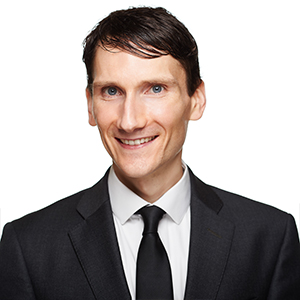
In practical terms, these linkages are visible in how companies operate. Investments in energy transition can reduce exposure to fuel price volatility, strengthen security of supply, and lower emissions over time. Workforce development can support companies’ productivity and retention. Resource efficiency can lower costs and help protect margins as input prices fluctuate. These dynamics are structural and extend beyond any single policy cycle.
In our view, this is what sustainability management looks like in practice: the management of material factors that influence business performance and long-term value.
An Integrated, Materiality-Driven Approach
At KKR, we view sustainability as integral to our responsibility as long-term stewards of capital. Our focus is on protecting and creating value by integrating material business factors into how we invest, operate, and support our portfolio.
This is not a standalone initiative. These considerations are embedded throughout the investment process and informed by the same macro perspectives, sector insights, and operational priorities that guide capital deployment more broadly. When approached with discipline, they may strengthen business performance rather than sit adjacent to it.
This philosophy has been consistent since we formalized our approach in 2008. Our focus has remained on identifying and managing the issues most material to a company’s business based on its industry, stakeholders, and operating context. In our experience, this helps companies mitigate risk, improve efficiency, and position for long-term growth.
Global Strategy, Local Execution: The European Perspective
While our investment philosophy is global, execution must reflect regional realities.
Historically, regulation has been a defining feature of the European approach, contributing to a strong focus on compliance and disclosure, including on sustainability. That framework is now entering a new phase. As policymakers balance transparency with economic competitiveness, companies are increasingly focused on where the regulatory trajectory is heading and what it will take to remain aligned over time, including understanding the underlying objectives of these frameworks and how they translate into measurable performance. In Europe, these underlying objectives reflect a broader lens, linking how external factors affect business performance with how companies themselves contribute to economic and societal outcomes.
What we are seeing in Europe is not a change in direction, but a shift in emphasis. As geopolitical and economic pressures build, the focus is moving toward competitiveness and resilience. When you look at it through that lens, what was previously seen as a separate agenda is now much more directly tied to core economic and strategic priorities."
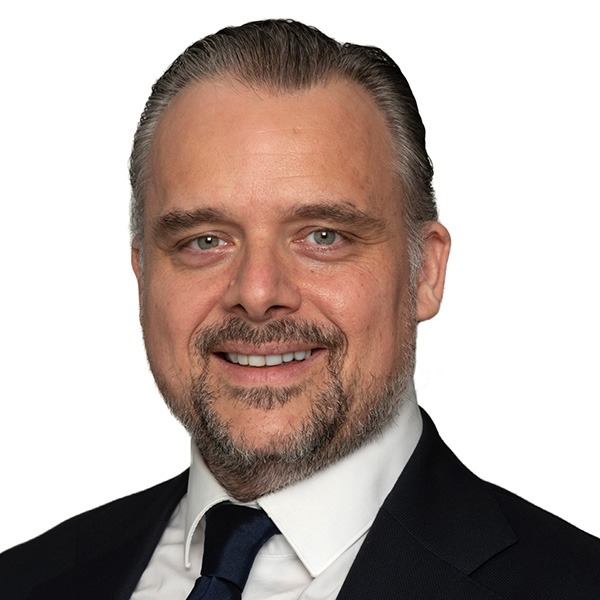
We see this as a rebalancing rather than a reset. The direction of travel remains toward greater comparability and transparency, but with greater emphasis on practicality and implementation. In this context, regulation is increasingly shaping how performance is measured and benchmarked across companies, thus helping to level the playing field while linking financial outcomes with broader economic and societal expectations. We believe companies that prepare for that evolution by building internal capabilities and focusing on material issues will be better positioned as clarity emerges.
In a more complex environment, our job is to stay focused on what matters. For us, that means identifying the issues that are most material to a business and managing them with the same discipline as any other business issue. That’s how we think about future-proofing investments over the long term.”

This evolution is also closely linked to broader European strategic priorities, including industrial policy, strategic autonomy, and the need to close the energy transition financing gap. Through this lens, many of these considerations are increasingly aligned with what we describe as the “Security of Everything”: strengthening resilience, competitiveness, and long-term economic stability. This is reflected in investments across our European portfolio, which span energy systems, infrastructure, and broader resilience themes that underpin long-term economic performance, including Contabo (a global cloud infrastructure and hosting provider), EGC (an energy service provider focused on decarbonizing the real estate sector), Encavis (a leading independent power producer focused on onshore wind and solar), Greenvolt (a diversified renewable platform across biomass, wind, solar and distributed generation), Ignis (a leading integrated global renewable group), and Zenobē (a specialist in battery storage and electric fleet solutions).

From Strategy to Implementation: Insights from the Portfolio
In April, we convened senior executives from over 25 portfolio companies across Private Equity and Global Impact at KKR’s Europe Sustainability Summit in London. The discussion focused on a central question: how to translate these priorities into measurable outcomes in a more complex environment.
Three themes stood out during those discussions:
1. Long-Term Focus, Short-Term Discipline
Leaders consistently reinforced that the underlying drivers, including efforts to improve energy efficiency and modernize energy systems, alongside energy security, workforce dynamics, and supply chain resilience, remain intact. At the same time, the regulatory environment is helping to define the boundaries for how performance is measured and compared over time, effectively shaping a more level playing field across companies.
There was a clear emphasis on pairing long-term objectives with near-term execution. In an evolving environment, clearly defined short-term targets and measurable milestones for material issues are increasingly important not only for maintaining credibility externally, but also for building alignment and momentum within organizations.
In our experience, this near-term focus helps management teams navigate uncertainty, prioritize effectively, and translate longer-term objectives into actions that drive performance within an evolving regulatory and competitive landscape.
2. Rebalancing Priorities Around Value
In a more resource-constrained environment, prioritization has become essential. This has reinforced the focus on translating these initiatives into financial terms and embedding them into core business decision-making. At the same time, the ability to adapt to a fast-evolving landscape is becoming increasingly important.
Across the portfolio companies represented, areas such as workforce engagement, energy efficiency, and product innovation stand out as where business performance and long-term positioning most directly intersect. These areas also differ in how value is realized. Efficiency-driven initiatives often deliver near-term cost savings, while revenue-related and intangible benefits, such as customer demand, brand, and talent, tend to materialize over a longer time horizon. As a result, companies are taking a more balanced view, combining financial metrics with broader indicators to assess progress.
This is also changing how these efforts are managed internally. Increasingly, sustainability teams are acting as translators, connecting operational initiatives to financial outcomes, and helping to build alignment across functions. More importantly, it enables clearer prioritization: focusing resources on the initiatives that are most material to performance, while being deliberate about where to scale back or defer efforts that are less value-accretive in the near term.
3. The Role of the Ecosystem
One of the most consistent observations from the summit was the value of peer learning and connectivity. Bringing together companies across sectors and geographies helps share practical approaches and accelerate execution – whether by identifying proven solutions or avoiding common pitfalls. Given the multi-faceted nature of sustainability-related topics, this kind of engagement is critical in helping connect the dots across functions, such as operations, procurement, human capital, and legal. Sustainability teams play an increasingly central role in this – acting as connectors across the business and helping translate priorities into coordinated action.
Another benefit of these communities of practice is access to external expertise. Third-party experts bring technical depth, support rigorous analysis, and help companies navigate areas where internal capabilities are still evolving. Our investments in firms such as ERM and FGS Global in Europe reflect this dynamic and contribute perspectives on implementation challenges and evolving external expectations.
In our view, this combination of peer exchange and expert input is increasingly important to build conviction and focus on what is most material.
Looking Ahead
This set of issues is entering a more pragmatic phase. The long-term direction remains intact, but the path forward requires navigating greater complexity—across policy, markets, and operations.
Our approach remains grounded in a simple principle: focusing on the issues that are most material to value creation and protection. This informs how and where we invest, how we support our companies, and how we assess performance over time.
Across our portfolio, management teams are focused on what they can control—prioritizing initiatives, quantifying value, and building capabilities to operate in a changing environment. That is the signal, and it continues to guide how we execute day to day and support our companies over time.”

DISCLOSURES


